
Why Health Insurance Claims Get Denied
Health insurance denials are far more common than most people expect. According to data from the Kaiser Family Foundation, insurers deny approximately 17% of in-network claims on average, with some plans rejecting as many as one in three claims. Yet fewer than 1% of denied claims are ever appealed. That gap represents billions of dollars in legitimate medical costs that patients end up paying unnecessarily.
Understanding why your claim was denied is the essential first step toward a successful appeal. The most common reasons fall into several categories.
Medical necessity disputes. The insurer determines that the treatment, procedure, or medication was not medically necessary based on their clinical guidelines. This is the most frequently contested denial type and also one of the most winnable on appeal, especially when your doctor provides supporting documentation.
Prior authorization failures. The treatment required pre-approval that was not obtained before the service was provided. Even when the care was urgent, insurers may deny claims retroactively for missing prior authorization.
Out-of-network charges. The provider was not in the insurer's network, resulting in a higher cost-sharing ratio or outright denial. The No Surprises Act of 2022 provides some protections for emergency care and certain non-emergency situations, but many patients still face unexpected denials.
Coding errors. Incorrect CPT or ICD-10 codes were used when submitting the claim. Sometimes a simple rebilling with the correct code resolves the issue without a formal appeal.
Benefit exclusions. The insurer considers the treatment experimental, cosmetic, or not covered under the plan. These denials are harder to overturn but not impossible if you can demonstrate medical necessity.
Appeal Deadlines and the Two-Stage Process
Most health insurance plans follow a two-stage appeal process, and understanding the timeline is critical because missing the deadline forfeits your right to appeal entirely.
Internal appeal (first stage). You submit a written appeal directly to your insurance company. Federal law under the Affordable Care Act requires insurers to allow at least 180 days (about 6 months) for filing an internal appeal. However, many plans set shorter windows of 30 to 60 days from the date of the denial notice. Check your denial letter carefully for the exact deadline that applies to your plan.
For urgent care situations where waiting could seriously jeopardize your health, you can request an expedited internal appeal. Insurers must respond to expedited appeals within 72 hours.
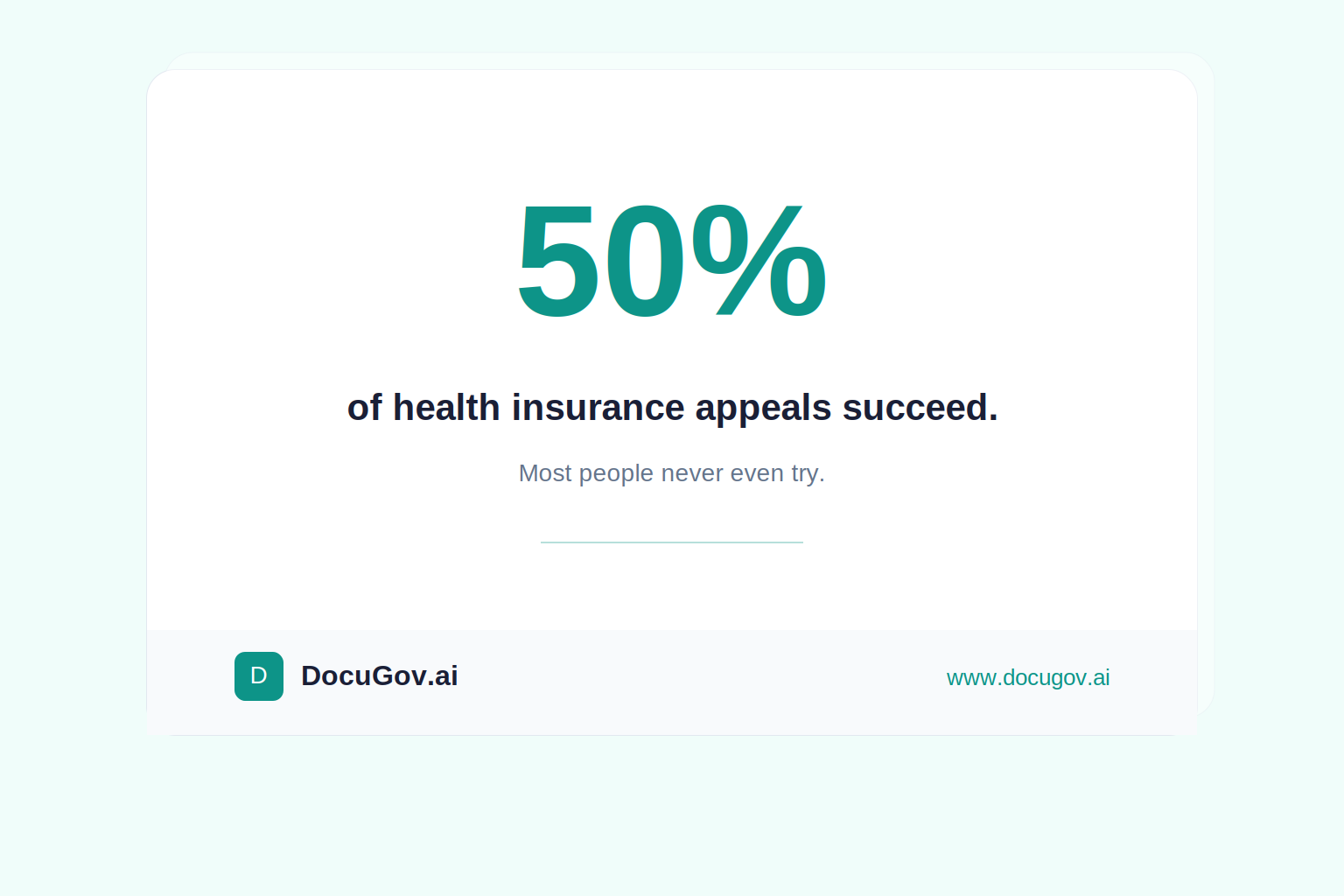
External review (second stage). If your internal appeal is denied, you have the right to an independent external review by a third party that has no connection to your insurer. This is a powerful tool: external reviewers overturn insurer decisions in approximately 40 to 60 percent of cases. The deadline for requesting external review is typically four months after receiving the internal appeal denial.
Some states offer additional consumer protections beyond the federal minimums. States like California, New York, and Illinois have particularly strong external review processes. Check your state insurance department website for specific rules.
Gathering the Evidence That Wins Appeals
A successful appeal is built on evidence, not emotion. Before writing your letter, assemble the following documentation:
The denial letter itself. Read it carefully and identify the specific reason code and explanation. The denial letter is your roadmap. Every argument in your appeal should directly address the stated reason for denial.
Your policy documents. Review your Summary of Benefits and Coverage (SBC) and the full plan document. Look for the specific language about what is and is not covered. If the denied service falls within covered benefits, cite the exact section and page number.
Medical records and doctor's notes. Request your complete medical records related to the denied treatment. Your doctor's clinical notes should document the diagnosis, the treatment plan, and why the specific service was medically necessary for your condition.
A letter of medical necessity from your doctor. This is the single most important piece of supporting evidence. Ask your physician to write a detailed letter explaining why the treatment is medically necessary in your specific case, what alternatives were considered and why they are insufficient, and what the likely health consequences would be without the treatment.
Peer-reviewed medical literature. If the insurer claims a treatment is experimental or not evidence-based, include relevant published studies from medical journals. Your doctor can help identify the most persuasive research.
Itemized bills and cost documentation. For out-of-network or cost-related denials, include itemized bills showing the specific charges in question.
Writing the Appeal Letter: Structure and Strategy
Your health insurance appeal letter needs to accomplish three things: identify the denial clearly, present your argument for why it should be overturned, and provide the evidence that supports your position. Here is the structure that works:
Header and identification. Include your full name, policy number, claim number, date of service, and the date and reference number of the denial letter. Make it easy for the reviewer to locate your file instantly.
Clear statement of purpose. Open with a direct sentence: "I am writing to appeal the denial of [specific treatment/claim] issued on [date], denial reference [number]." Do not bury the point.
Address the specific denial reason. Take the insurer's stated reason and respond to it directly. If they said the treatment was not medically necessary, present the medical evidence that proves otherwise. If they cited a policy exclusion, show why the exclusion does not apply to your situation or why the treatment falls within a different covered category.
Present your evidence in a logical order. Lead with your strongest argument. Attach your doctor's letter of medical necessity, relevant medical records, and any supporting research. Number and label each attachment, and reference them by number in your letter.
Request a specific outcome. End by clearly stating what you want: full coverage of the denied claim, reprocessing of the claim with corrected codes, or authorization for the pending treatment.
Professional tone throughout. An appeal letter is a formal document. Avoid emotional language, complaints about the insurer, or threats. Stick to facts, evidence, and clear reasoning. The reviewer processes hundreds of appeals. A well-organized, evidence-based letter stands out.
If you need help structuring your appeal, DocuGov.ai can generate a professionally formatted appeal letter tailored to your specific denial reason and insurance type. The AI incorporates the correct structure, formal tone, and legal references that strengthen your case.
Five Mistakes That Kill Insurance Appeals
Missing the deadline. This is the most preventable failure. The moment you receive a denial, mark the appeal deadline on your calendar and work backward. If your denial letter does not clearly state a deadline, call the insurer's member services number and ask for the exact date in writing.
Sending a generic letter. A vague letter that says "I disagree with the denial, please reconsider" will fail. Your appeal must address the specific reason the claim was denied and present specific evidence that counters that reason.
Appealing without your doctor's support. Your physician's letter of medical necessity carries more weight than anything you can write yourself. If your doctor is unwilling to write a supporting letter, consider whether a specialist referral might provide the documentation you need.
Not requesting the claim file. You have the legal right to see your complete claim file, including any internal notes, clinical reviews, or medical director opinions used to deny your claim. Request this file before writing your appeal. It often reveals the specific clinical guidelines the insurer relied on, allowing you to counter them directly.
Giving up after one denial. Many patients treat the first denial as final. It is not. The internal appeal and external review stages exist specifically because initial denials are frequently incorrect. The external review stage is particularly powerful because an independent reviewer often disagrees with the insurer's original decision.
When to Escalate to External Review
If your internal appeal is denied, do not stop there. The external review process is your most powerful tool. An independent reviewer, typically a physician who specializes in the relevant medical field, evaluates your case from scratch. They are not employed by your insurer and have no financial incentive to deny your claim.
External review is particularly effective for medical necessity disputes because the independent reviewer applies current clinical standards rather than the insurer's potentially outdated or overly restrictive guidelines. Data from multiple state insurance departments shows that external reviewers overturn insurer denials in 40 to 60 percent of cases.
To request an external review, you typically need to submit a written request within four months of receiving your internal appeal denial. Include all the documentation from your internal appeal plus any additional evidence you have gathered. There is usually no cost to the patient for an external review.
In some states, you may also file a complaint with your state insurance commissioner's office. This creates an additional layer of oversight and can sometimes prompt the insurer to reconsider even before the formal review is complete.
Using AI to Strengthen Your Appeal
Writing a formal appeal letter under deadline pressure, while dealing with a medical situation, is stressful. The letter needs to be precise, well-structured, reference the correct policy language, and present a logical argument. Many people struggle with where to begin.
AI-powered letter generators like DocuGov.ai solve this problem by producing a complete, professionally structured appeal letter based on your specific situation. You describe the denial reason, the treatment in question, and your circumstances. The AI generates a formal letter that includes the correct structure and formatting expected by insurance review boards, references to relevant policy provisions and consumer protection laws, clear argumentation tailored to your specific denial reason, and professional language that conveys seriousness without hostility.
The generated letter serves as a strong foundation that you can personalize with your specific medical details and supporting documentation. Combined with your doctor's letter of medical necessity, this approach gives you the best chance of a successful appeal.